
Bandwagon Effect in Marketing: Why People Follow the Crowd
September 7, 2026 | 789 views | 12 min. read time

Why does a restaurant with a queue outside feel more appealing than the empty one next door, even when you know nothing about either? That instinct — to assume that if many people are doing something it must be the right choice — is the bandwagon effect, and it is one of the most powerful forces in marketing. This guide explains what it is, why it works, and how to use it honestly to turn hesitant visitors into buyers.
1. What the bandwagon effect is
The bandwagon effect is the tendency to adopt a behaviour, belief, or purchase simply because many other people already have. The more popular something appears, the more its popularity feeds on itself — people climb aboard because others already have, not because they have independently weighed the decision.
The name comes from 19th-century political parades, where supporters would literally jump on a candidate’s bandwagon to be seen backing a winner. The mechanism is the same online: a product with thousands of sales, a long list of reviews, or a visible crowd of current users pulls new people in by sheer momentum.
For a marketer, that momentum is valuable because it means popularity is not just a result of a good product — it becomes a cause of more sales in its own right.
2. Why the bandwagon effect works
Three forces combine to make the bandwagon effect so reliable:
- The uncertainty shortcut. When we cannot easily judge quality ourselves — which is most of the time online — we treat the choices of others as evidence. If hundreds of people bought it, it is probably fine, and leaning on that saves mental effort while feeling safe.
- Fear of missing out. Seeing a crowd move toward something triggers a worry that we will be left behind, stuck with the worse option while everyone else enjoys the better one.
- A desire to belong. People want to be part of the group. Choosing what the majority chose is a quiet way of fitting in, and going against the crowd feels unnecessarily risky.
Together these make popularity self-reinforcing. Each new buyer is both responding to the crowd and becoming part of the crowd that persuades the next person.
3. The bandwagon effect and social proof
The bandwagon effect and social proof are close cousins, and the terms are often used interchangeably, but there is a useful distinction. Social proof is the broad principle that we look to other people’s behaviour to guide our own. The bandwagon effect is the specific, snowballing version of it: the more people adopt something, the faster the next group follows.
In practice, every social proof tactic you deploy — reviews, recent-sales notifications, customer counts, live visitor numbers — is a way of making the bandwagon visible. The crowd already exists; social proof simply shows it to the next visitor so the effect can take hold.
That is why the idea matters so much to online stores: the internet hides the crowd by default. A busy shop looks busy, but a busy website looks identical to an empty one unless you deliberately choose to reveal the activity happening on it.
4. How online stores put it to work
There is an order-of-operations lesson buried in these tactics, too. The crowd signals work best early, before a visitor has formed an opinion, because that is when uncertainty is highest and the shortcut of “others chose this” carries the most weight. A bestseller label or a live visitor count seen on arrival frames the whole visit; the same signal discovered only at checkout arrives after most of the deciding is already done. So place your proof where first impressions form — on category pages, at the top of product pages, and beside the items you most want to sell.
Making the crowd visible is the whole game. The most effective tactics include:
- Bestseller and “popular” labels. Tagging your most-bought items as bestsellers tells shoppers where the crowd is heading and concentrates demand there, which makes those products sell even faster.
- Recent-sales notifications. A small popup announcing that “someone just bought this” turns invisible, one-at-a-time purchases into a visible stream of activity that every later visitor can see.
- Customer and usage counts. “Join 25,000 businesses” or “3,000 sold this month” puts a concrete number on the crowd, which lands far harder than a vague claim of being popular.
- Live visitor counts. Showing how many people are viewing an item right now creates a real-time crowd around it and a gentle sense that it is in demand this moment.
- Review volume. A high review count signals that many people have already committed; a product with 2,000 reviews feels markedly safer than an identical one with none.
Each of these answers the same quiet question in the shopper’s mind: are other people choosing this? When the answer is visibly yes, the bandwagon starts to roll.
5. A worked example
Suppose a product page gets 6,000 visitors a month and converts at 2%, for 120 orders. The page is fine, but it shows no sign of the activity happening behind the scenes — those 120 monthly buyers are completely invisible to everyone who comes after them.
You add two bandwagon signals: a recent-sales popup drawn from real orders, and a “1,000+ sold” badge on the page. Nothing about the product itself changes; you have simply made the existing crowd visible. Conversion rises from 2% to 2.3%. On 6,000 visitors that is 18 extra orders a month, and at a $55 average order value, roughly $1,000 in additional monthly revenue — produced entirely by revealing demand that was already there.
That is the quiet power of the bandwagon effect: the crowd does the persuading, so your job is not to manufacture popularity from nothing but to stop hiding the popularity you have already earned.
6. How to use it honestly
The bandwagon effect only works while people believe the crowd is real. Fake it and you borrow against your own credibility — and, increasingly, against the law, as consumer-protection rules crack down on invented sales and fabricated popularity.
A few rules keep you on the right side of it:
- Show real activity only. Recent-sales popups and visitor counts should reflect genuine events, never scripted ones.
- Do not inflate the numbers. If a product is new, lead with a different honest signal rather than a made-up sales figure.
- Let quiet pages be quiet. A visible crowd that is not actually there will ring false; wait until the activity is real before you broadcast it.
Authentic momentum compounds; faked momentum collapses the moment a shopper senses it. Honesty is not a constraint here — it is the thing that makes the effect last.
7. Putting the bandwagon effect to work
You almost certainly already have a crowd — buyers, signups, reviewers, visitors. The opportunity is simply to make it visible to the next person who lands on your site. Start by surfacing your genuine activity where decisions happen: recent sales on product pages, a live visitor count on popular items, and your real customer or review numbers near the buy button.
Proofly is built for exactly this: it turns your real orders, signups, and visitor numbers into recent-sales popups, live visitor counts, and review widgets, so the crowd that is already choosing you becomes part of the pitch to everyone who arrives next. Social proof like this can lift conversions by up to around 15% — not by manufacturing popularity, but by finally showing the popularity you have earned.
Use FOMO on your website!
Install Proofly in a few clicks to take advantage of FOMO on your website today! No creditcard required.
Get started now!Always be up-to-date with Proofly.
The amount of people using your website on mobile devices rapidly increases. Make sure your websites are fully responsive!
59.171%
Mobile devices
This might be useful for you too:

How to Get Social Proof Fast: 10 Quick Wins
Sometimes you cannot wait months to build credibility. A launch is coming, a campaign is live, or a product page is converting poorly and you need proof on it this week. The good news: several forms of social proof...
2022-09-28
Read more

How to Build Trust on Your Website: A Guide for Owners and Marketers
Trust is the currency of the web. A visitor who trusts you will buy, subscribe, and return; one who does not will leave, no matter how good your offer. For business owners and marketers, building trust on your websi...
2022-02-23
Read more
Scarcity Marketing: 12 Ethical Ways to Drive Action
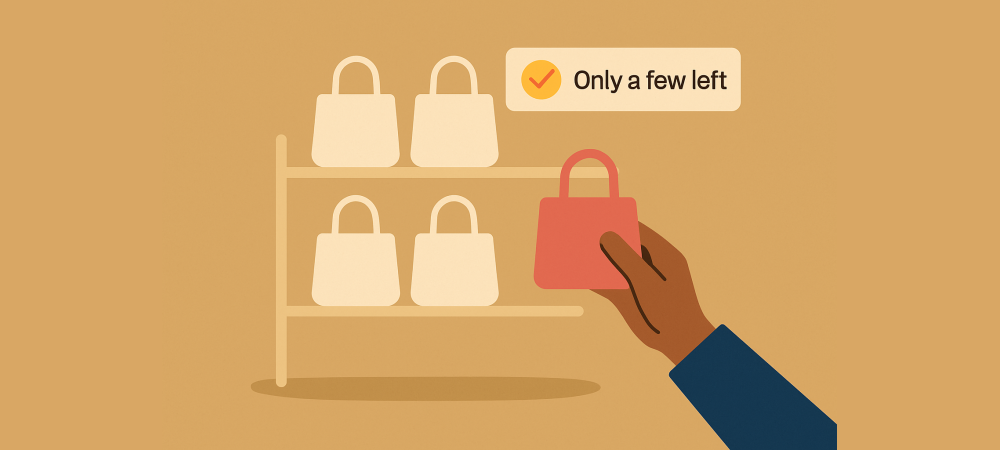
Scarcity is one of the oldest persuasion principles there is: we want what is rare, and we act faster when something might run out. Done honestly, scarcity marketing helps customers prioritise a genuine opportunity...
2022-11-26
Read more
Ready to use social-proof too?
You can use Proofly within 5 minutes on your own website absolutely free!
Set-up in 5 minutes Over 25,000 satisfied customers No monthly subscription
4.7/5 customer satisfaction
Get started now!
a few thousand others...