
Nudge Marketing: How Small Cues Drive Big Decisions
May 16, 2025 | 3,612 views | 12 min. read time
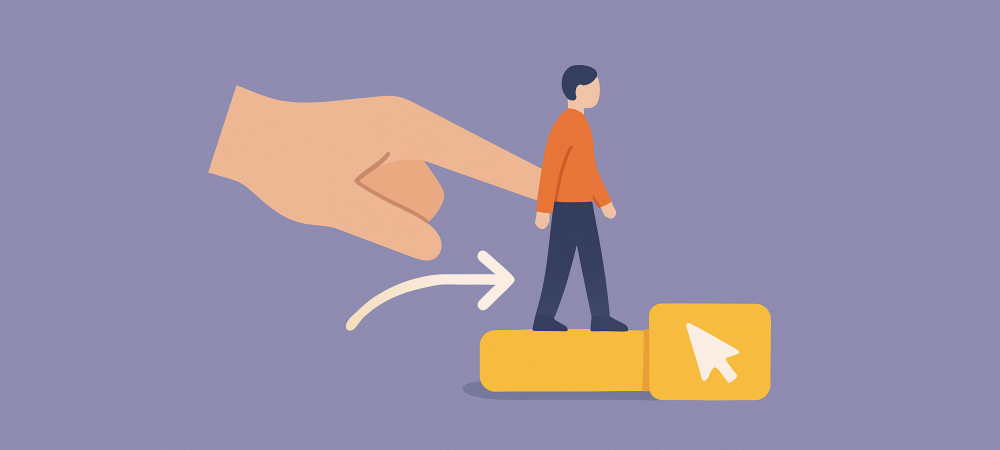
Sometimes the smallest change makes the biggest difference. A default option, a well-placed suggestion, a line showing what others chose — none of these force a decision, yet each can dramatically shift what people do. This is the idea behind nudge marketing: guiding choices with gentle cues rather than pressure. This guide explains what nudge marketing is, why it works, and how to use nudges to drive decisions without being pushy.
1. What nudge marketing is
A nudge is a small design choice that steers people toward a particular decision while leaving them completely free to choose otherwise. The concept comes from behavioural economics, popularised by Richard Thaler and Cass Sunstein, who showed that the way choices are presented — the “choice architecture” — strongly influences what people pick, even when the options themselves do not change.
Nudge marketing applies this to how you present products, prices, and calls to action. Rather than adding pressure or new incentives, it arranges the existing choices so the best or most popular option is the easy, obvious one. Done well, a nudge helps people make a decision they are happy with; it guides rather than shoves.
2. Why nudges work
Nudges work because people rarely weigh every option from scratch. Faced with choices, we lean on mental shortcuts, defaults, and cues from our environment to decide quickly. A nudge simply makes the desired path the path of least resistance, working with those instincts rather than against them.
Crucially, a good nudge does not remove freedom or hide options — it just reduces the friction on one path and highlights it. That is why nudges feel comfortable rather than manipulative when done right: the person still chooses, and still could have chosen differently, but the environment made one option easier and more appealing. That is why the same nudge can feel almost invisible and yet change behaviour at scale — it works with the grain of how people already decide, rather than against it.
3. Common types of nudge
Nudges take several familiar forms in marketing:
- Defaults. The pre-selected option most people stick with — a recommended plan, a default quantity, an opt-in already ticked (where appropriate and honest).
- Social proof nudges. Showing what others chose — “most popular,” “bestseller,” or real recent activity — to guide the undecided toward a safe choice.
- Framing. Presenting the same information in a more appealing way, such as highlighting savings or leading with benefits.
- Salience. Making the desired option stand out visually, through contrast, position, or emphasis.
- Friction reduction. Removing steps and effort from the path you want people to take, such as one-click actions or guest checkout.
4. Nudges in action: examples
Nudges are everywhere once you notice them. A pricing page that highlights one tier as “most popular” nudges undecided buyers toward it. A checkout that offers guest checkout by default reduces friction and nudges people to complete the purchase. A “customers also bought” suggestion nudges a larger order. A subtle line showing that others are viewing or buying a product nudges a hesitant shopper to act.
That last example — social proof as a nudge — is one of the most effective, because it guides gently using genuine behaviour. Real-time notification tools such as Proofly act as an honest nudge by showing real recent purchases and activity, steering the undecided toward a choice others have already made without any pressure or invention.
5. How to use nudges without being pushy
The whole appeal of a nudge is that it is gentle, so the fastest way to ruin one is to make it aggressive. Keep nudges subtle and helpful: a highlighted recommendation, not a flashing demand; a reduced-friction path, not a forced one. The person should always feel they are choosing freely, because with a genuine nudge they are.
Honesty matters just as much. A “most popular” label should be true, a default should be in the customer’s interest as well as yours, and any social proof nudge should reflect real behaviour. A nudge that quietly misleads — a fake bestseller, a sneaky pre-ticked box that costs the customer — is not a nudge but a dark pattern, and it erodes trust the moment it is noticed.
6. Nudging ethically: the line that matters
There is a clear line between a nudge and a manipulation, and it is worth keeping in view. An ethical nudge helps people make a decision that is good for them, made easier; a dark pattern tricks people into a decision that benefits only you, often against their interest. Defaulting a customer into a helpful choice they can easily change is a nudge; defaulting them into an expensive add-on they did not notice is a trap.
Stay on the right side of that line and nudging is not only ethical but sustainable, because it builds the kind of trust that keeps customers coming back. The test is simple: would the customer, if they understood exactly what you did, feel helped or tricked? Design for “helped,” and your nudges will work for the long term.
A worked example
Consider a subscription business with three plans and a checkout that quietly loses people. Without changing the plans or the prices, the team applies a series of nudges. They label the plan they most want to sell — and that genuinely suits most customers — as “most popular,” using social proof to guide the undecided. They pre-select that plan as the default, reducing the effort of choosing. They strip two unnecessary fields from the checkout to lower friction, and they make the primary button stand out clearly through contrast.
Every option is still available, every price is unchanged, and nothing is hidden or misrepresented — the “most popular” label is true and the default genuinely fits most people. Yet more visitors complete a purchase, and more choose the plan that serves them best. That is nudging done right: the same choices, arranged so the good decision is the easy one, with the customer free at every step to decide otherwise. Small cues, honestly applied, moved big numbers — without a hint of pressure.
Frequently asked questions
What is nudge marketing?
Nudge marketing guides people toward a decision using small cues — defaults, social proof, framing, and reduced friction — while leaving them completely free to choose otherwise. It shapes how choices are presented rather than forcing an outcome.
Is nudge marketing manipulative?
Not when done ethically. A genuine nudge makes a good choice easier without hiding options or deceiving. It becomes manipulation only when it tricks people into decisions against their interest, which is a dark pattern, not a nudge.
What is an example of a nudge?
Labelling one pricing tier “most popular,” offering guest checkout by default, or showing genuine recent-purchase activity. Each gently steers the undecided toward a choice without removing their freedom to pick differently.
Conclusion
Nudge marketing proves that you do not need pressure to influence decisions — often a small, well-placed cue does more than a hard sell. Use defaults, framing, salience, reduced friction, and honest social proof to make the best choice the easy choice, and keep every nudge subtle and truthful. Stay on the helpful side of the line, and nudges guide your customers toward decisions they are glad they made — which is exactly the kind of persuasion that lasts.
Need more customers/visitors?
Use Proofly to add high-converting widgets for your website to boost conversion. No creditcard required.
Get started now!Always be up-to-date with Proofly.
The amount of people using your website on mobile devices rapidly increases. Make sure your websites are fully responsive!
55.413%
Mobile devices
This might be useful for you too:
When Social Proof Backfires: 8 Ways It Costs You Sales
Social proof usually helps — but not always. Used carelessly, the very notifications meant to build trust can quietly destroy it, making your store look unpopular, pushy, or fake, and costing you the sales the...
2026-04-28
Read more
Star Ratings and Conversions: What the Data Says
Those little rows of stars next to a product do more heavy lifting than almost any other element on a page. Shoppers scan them in a fraction of a second and use them to decide what to click, what to trust, and what...
2023-08-09
Read more
How to Calculate Your Conversion Rate (And What Good Looks Like)
Your conversion rate is one of the most important numbers in your business — it tells you how well your website turns visitors into customers. Yet many store owners either do not track it or are not sure how...
2023-08-30
Read more
Ready to use social-proof too?
You can use Proofly within 5 minutes on your own website absolutely free!
Set-up in 5 minutes Over 25,000 satisfied customers No monthly subscription
4.7/5 customer satisfaction
Get started now!
a few thousand others...