
The Psychology of FOMO: Why It Works and How to Use It
March 4, 2022 | 16,074 views | 10 min. read time

The fear of missing out — FOMO — is one of the most powerful forces in human behaviour, and one of the most misused in marketing. Understanding the psychology behind it helps you see why it drives people to act, and how to use it in a way that persuades honestly rather than manipulates. Here is what FOMO really is, why it works, and how to apply it ethically.
1. What FOMO actually is
FOMO is the uneasy feeling that others are enjoying an opportunity, experience, or advantage that you are missing out on. It is a mix of anxiety and desire: the worry of being left behind, combined with the pull to be part of what everyone else seems to be doing. Though the term is modern, the feeling is ancient — humans are social creatures, and being excluded from what the group values has always felt like a threat worth avoiding.
In everyday life, FOMO shows up when we scroll past friends’ adventures, hear about a deal we nearly grabbed, or notice a trend gaining steam without us. It is not irrational; it reflects a real instinct to keep up with our peers and not squander opportunities. Understanding FOMO as this deep, natural response — rather than a gimmick invented by marketers — is the first step to using it thoughtfully. It works because it taps something genuine in how people feel.
2. Why FOMO drives people to act
Psychologically, FOMO is powered by a few well-established tendencies. One is loss aversion: people feel the pain of a potential loss more sharply than the pleasure of an equivalent gain, so the prospect of missing out stings more than the prospect of gaining stirs us. Framed as something you might lose, an opportunity becomes far more motivating than the same thing framed as something you might gain.
Another is social proof and the herd instinct. When we see that others are participating — buying, joining, attending — we assume it must be worthwhile and feel pulled to join too. Add scarcity and urgency, the sense that an opportunity is limited or closing, and the motivation sharpens further, because a closing window forces a decision now rather than later. Together, these forces make FOMO a strong prompt to action: it converts vague interest into a felt need to act before it is too late. That is precisely why marketers reach for it.
There is also an emotional dimension worth understanding. FOMO does not just make a rational case for acting; it creates a small, genuine discomfort at the thought of missing out, and people are motivated to relieve that discomfort. Acting — buying, joining, signing up — resolves the tension. This is why FOMO can move people who were merely curious: the feeling itself becomes a reason to act, quite apart from the logical merits of the offer.
3. FOMO in marketing: the ethical line
Because FOMO is so effective, it is heavily used in marketing — limited-time offers, low-stock warnings, countdown timers, and signs of others buying. Used honestly, these are legitimate and helpful: a real deadline or a genuinely limited supply is useful information that helps a customer decide. The problem is that FOMO is also easy to fake, and fake FOMO is where marketing crosses into manipulation.
The ethical line is simple: is the pressure real? A countdown to a sale that genuinely ends is honest; one that resets every visit is a lie. A “only a few left” message that reflects real stock is fair; one hard-coded to always say it is deceptive. Manufactured FOMO might work briefly, but when people sense they were tricked, trust collapses — and trust is far more valuable than any single sale. Ethical FOMO uses genuine scarcity and real deadlines to inform and motivate, never invented pressure to manipulate. Staying on the right side of that line protects both your customers and your reputation.
4. How to use FOMO honestly on your website
The good news is that most businesses have plenty of genuine FOMO to work with, no fabrication required. Real limited-time promotions, real deadlines, genuinely limited stock or seats, and real signs of others taking action all create authentic urgency. Surface these clearly: show the true end date of a sale, the real number of items left when it is genuinely low, and honest activity when others are buying. Each is both truthful and motivating.
Tools make honest FOMO easy to implement. With Proofly, you can add countdown timers tied to a real campaign deadline, recent-purchase and activity notifications drawn from your genuine sales, and a live visitor counter that reflects real interest — so you trigger the FOMO effect using only what is actually happening on your site. That gives you the persuasive power of urgency without the risk that comes with faking it. You can start with a free Proofly account to create genuine urgency that respects your customers. The aim is to inform and gently prompt, not to pressure through deception.
5. A worked example: honest FOMO in action
Imagine a store running a genuine weekend sale on a popular product with limited stock. Rather than hiding these facts, it puts them to work honestly. A countdown timer shows the real time left until the sale ends on Sunday night — and when it hits zero, the sale really ends. A stock indicator shows the true number remaining, which is genuinely low because the product is selling. A notification shows real recent purchases as they happen.
A visitor arrives, sees that the deal is real and time-limited, that stock is genuinely running down, and that others are buying — and feels a legitimate pull to act rather than risk missing out. They buy, and they never feel tricked, because nothing was faked. Later, if they return and see the sale genuinely ended as promised, their trust in the store deepens rather than erodes. That is honest FOMO working exactly as it should: it motivated a real decision using real facts, benefiting the customer and the business alike.
The takeaway
FOMO is powerful because it taps genuine human instincts — loss aversion, the pull of the crowd, and the urgency of a closing window. That makes it a highly effective marketing force, and also an easy one to abuse. The key is honesty: use real deadlines, real scarcity, and real signs of demand to inform and motivate your customers, never invented pressure to manipulate them. Applied ethically, FOMO helps people act on opportunities they genuinely value, lifts your conversions, and builds rather than breaks trust. Understand the psychology, respect the line, and let genuine urgency do the work.
Increase conversions for free?
Get started with conversion-boosting social-proof widgets totally free! No creditcard required.
Get started now!Always be up-to-date with Proofly.
The amount of people using your website on mobile devices rapidly increases. Make sure your websites are fully responsive!
55.413%
Mobile devices
This might be useful for you too:

FOMO Marketing: How to Use Fear of Missing Out Ethically in 2022
FOMO — the fear of missing out — is one of the most powerful forces in marketing, and one of the most abused. Used well, it gives people a genuine reason to act now instead of “later,” which...
2022-10-20
Read more

The Business Benefits of Social Proof: How It Builds Trust and Grows Sales
Social proof is often discussed as a conversion trick, but its real value to a business runs deeper. Handled well, the visible trust of your customers becomes a genuine business asset — one that lowers your co...
2021-10-01
Read more
Scarcity Marketing: 12 Ethical Ways to Drive Action
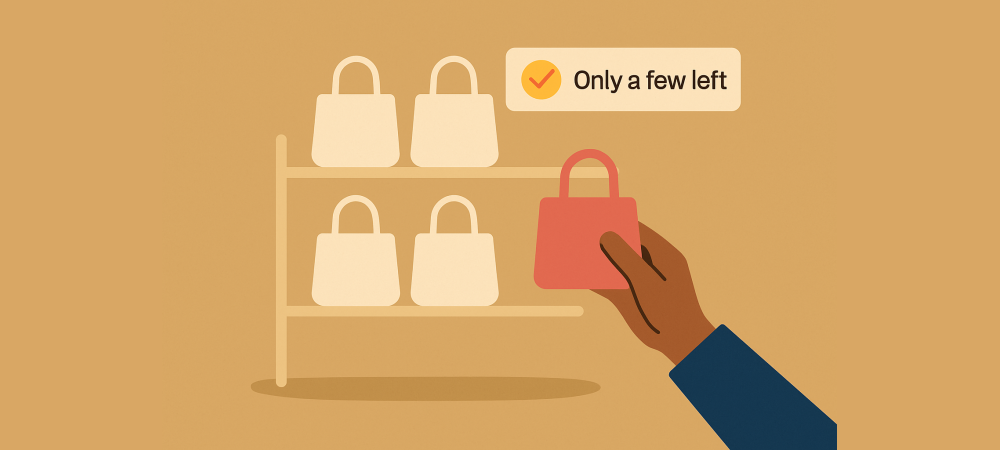
Scarcity is one of the oldest persuasion principles there is: we want what is rare, and we act faster when something might run out. Done honestly, scarcity marketing helps customers prioritise a genuine opportunity...
2022-11-26
Read more
Ready to use social-proof too?
You can use Proofly within 5 minutes on your own website absolutely free!
Set-up in 5 minutes Over 25,000 satisfied customers No monthly subscription
4.7/5 customer satisfaction
Get started now!
a few thousand others...