
Anchoring, Scarcity and Social Proof: The Psychology of Pricing
June 24, 2025 | 2,537 views | 11 min. read time
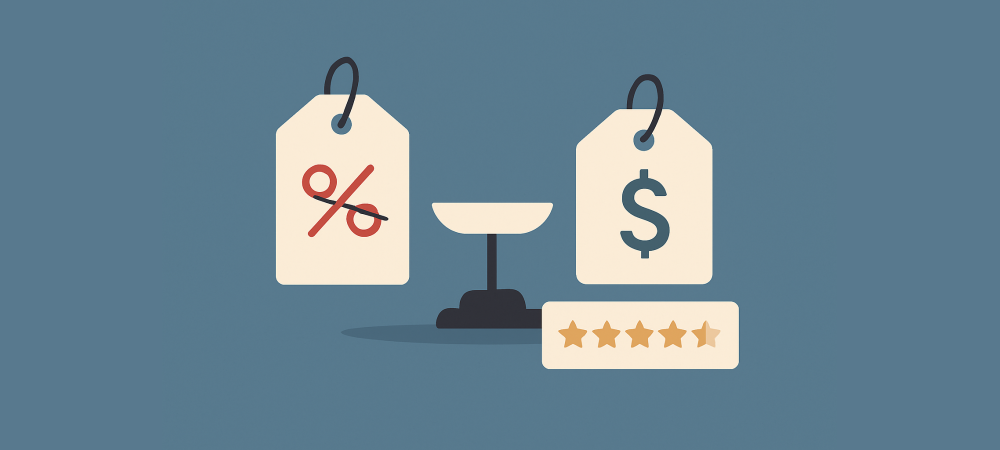
Price is never just a number. How much someone is willing to pay depends far more on psychology than on the figure itself — on what they compare it to, how it is framed, and what others are paying. Understanding the psychology of pricing lets you present your prices so they feel fair and compelling rather than high. This guide covers the key forces at work, from anchoring and scarcity to social proof, and how to use them honestly.
1. Why pricing is psychological
People have no absolute sense of what most things should cost. Instead, we judge a price by comparison — to other options, to what we expected, to what we have seen before. That means the same price can feel expensive or like a bargain depending entirely on the context you present it in. Pricing psychology is the craft of shaping that context so a fair price feels fair.
This is not about tricking people into overpaying. Used honestly, it is about removing the confusion and doubt that stop people buying something genuinely worth the money. The forces below all shape how a price is perceived, and each can be used to help a shopper make a confident decision.
2. Anchoring: the power of comparison
Anchoring is the tendency to rely heavily on the first number we see. That initial figure becomes a reference point against which everything else is judged. Show a higher “original” price beside a sale price, and the sale feels like a clear saving; the anchor did the work of making the lower number look good.
Marketers use anchoring in several honest ways: displaying the regular price next to a genuine discount, offering a premium tier that makes the middle option look reasonable, or leading with a high-value bundle before showing individual prices. The key is that the anchor must be real — a genuine original price or a real premium option — not an invented “was” price that never applied, which is both misleading and, in many places, against the rules.
3. The decoy effect and price tiers
Closely related to anchoring is the way we choose between tiers. When you offer three options, the middle one often wins, because the cheapest feels like a compromise and the dearest feels like a stretch — a pattern smart pricing pages use deliberately. A well-designed premium tier can also act as a decoy, making the option you most want to sell look like the sensible, best-value choice by comparison.
Used honestly, tiered pricing helps people self-select the option that fits them, with the structure gently guiding them toward a sensible middle. The line to avoid is engineering tiers purely to confuse or to push people into paying more than they need; the goal is clarity, not a maze.
4. Scarcity: what is rare feels valuable
Scarcity changes how we value a price. When something appears limited — in stock, in time, or in availability — we perceive it as more valuable and feel more urgency to buy at the current price before the chance passes. A genuine “launch price ends Friday” or a real limited edition makes a price feel like an opportunity rather than a cost.
As always, the scarcity must be real. An honest deadline or a true limited run adds legitimate urgency to a pricing decision. A fake countdown or permanent “limited offer,” by contrast, is quickly seen through and turns urgency into suspicion. Real scarcity makes a fair price feel timely; fabricated scarcity makes every price you show look untrustworthy.
5. Social proof: what others pay and choose
Social proof shapes pricing as powerfully as it shapes everything else. When shoppers can see that others chose a particular plan, bought at a certain price, and were happy, that price feels validated — the crowd has already judged it worth paying. Labelling a tier “most popular,” showing strong reviews beside a price, and displaying real purchase activity all reassure a hesitant buyer that the price is fair.
This is where social proof and pricing meet directly. Showing genuine reviews and recent purchases at the point of decision — something tools like Proofly make easy — tells a shopper that real people happily paid this price, which does more to justify it than any amount of your own copy. The crowd’s verdict on a price is often the most convincing argument for it.
This is especially valuable for higher prices, where doubt is strongest. A premium product or plan always raises the question “is it worth it?”, and no amount of self-description fully answers it. But a wall of genuine reviews from people who paid that price and were delighted answers it directly — they took the risk you are asking the shopper to take, and it paid off. Social proof turns a price from a leap of faith into a decision others have already validated.
6. Framing and charm pricing
Finally, small framing choices shape perception. Presenting a cost as “just 1 a day” rather than a larger annual figure makes it feel smaller and more manageable. Leading with the value or savings rather than the raw price shifts attention to what the buyer gains. And charm pricing — ending a price just below a round number — makes it register as meaningfully cheaper than it strictly is.
These techniques are subtle and common, and honest as long as they clarify rather than deceive. Framing a genuine price in its most understandable, appealing form helps people decide; hiding the true cost behind confusing framing does not. As with every force here, the aim is to make a fair price easy to say yes to.
The through-line across all of these forces is context. A price in isolation is just a number a shopper has no way to judge; the same price surrounded by a sensible anchor, a clear comparison, honest scarcity, and the visible approval of others becomes something they can evaluate with confidence. Good pricing psychology does not change the number — it gives the number the context that lets people see it is fair.
Frequently asked questions
What is the psychology of pricing?
It is how people perceive and judge prices — by comparison, framing, scarcity, and what others pay — rather than in absolute terms. Understanding it lets you present a fair price so it feels fair and compelling.
What is anchoring in pricing?
Anchoring is relying on the first number you see as a reference point. Showing a genuine original price beside a sale price, or a premium tier beside a mid one, makes the target price look more reasonable by comparison.
How does social proof affect pricing?
It validates a price. When shoppers see that others chose a plan and were happy, the price feels justified. “Most popular” labels, reviews beside prices, and real purchase activity all reassure buyers that a price is fair.
Conclusion
Price is judged in the mind, not on the tag. Anchoring sets the comparison, tiers guide the choice, scarcity adds timely urgency, social proof validates the cost, and framing makes it easy to grasp — and every one of these works best when it is honest. Use the psychology of pricing to remove doubt and present a genuinely fair price at its most compelling, and you help people buy with confidence rather than pressure them into paying more.
Increase conversions for free?
Get started with conversion-boosting social-proof widgets totally free! No creditcard required.
Get started now!Always be up-to-date with Proofly.
The amount of people using your website on mobile devices rapidly increases. Make sure your websites are fully responsive!
55.413%
Mobile devices
This might be useful for you too:
Spin to Win Popups: Do Gamified Popups Actually Convert?
Spin-to-win popups — the little prize wheels that offer a discount in exchange for an email address — are everywhere, and they promise to turn dull email capture into a game people want to play. But do...
2024-09-26
Read more

How to Display Testimonials That Convert (With Examples)
Collecting great testimonials is only half the battle. A glowing quote buried on a forgotten page persuades no one, while the same quote placed and presented well can be the reason someone finally buys. Displaying...
2023-05-10
Read more
How to Add Social Proof to WooCommerce
WooCommerce turns any WordPress site into an online store, but a store still has to earn a shopper’s trust before it earns their money. Social proof — reviews, ratings, real-time activity, and trust bad...
2024-03-24
Read more
Ready to use social-proof too?
You can use Proofly within 5 minutes on your own website absolutely free!
Set-up in 5 minutes Over 25,000 satisfied customers No monthly subscription
4.7/5 customer satisfaction
Get started now!
a few thousand others...