
Social Credibility: How to Build It Online in 2023
February 5, 2023 | 8,936 views | 13 min. read time
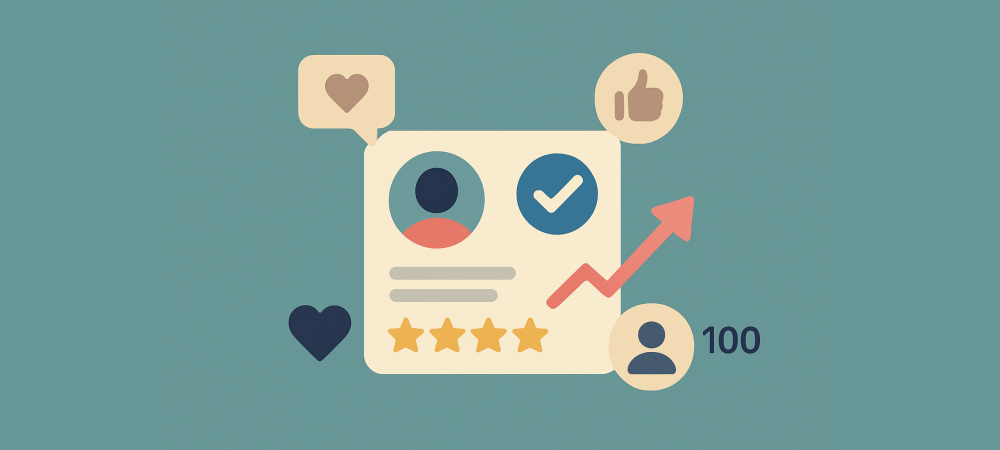
You can have a great product and still be ignored if no one believes you are credible. Social credibility — the sense that a brand or person is trusted, established, and worth taking seriously — is what makes people click, follow, and buy. It is built from everything others can see about you: your reviews, your following, your content, your mentions, and the consistency that ties them together. Here is how to build social credibility online in 2023, step by step, whether you are starting from scratch or strengthening what you already have.
1. What social credibility is
Social credibility is the reputation you hold in the eyes of the public — the accumulated impression that you are legitimate, competent, and trusted by others. It overlaps with social proof, but it is broader. Social proof is a specific signal, such as a review or a customer count. Social credibility is the overall picture those signals create across your website, your social profiles, search results, and word of mouth.
Think of it as your online reputation working while you sleep. When someone hears your name and looks you up, everything they find — or fail to find — shapes whether they trust you before you ever speak to them.
2. Why social credibility matters
People research before they commit. Before buying, hiring, or following, they check reviews, scan your social presence, and search your name. A credible footprint turns that research into reassurance; a thin or inconsistent one turns it into doubt. In a crowded market, credibility is often the tiebreaker between you and a competitor offering much the same thing.
It also compounds. The more credible you appear, the more people engage, and that engagement — reviews, follows, shares, mentions — makes you more credible still. Building it is less a one-off campaign than a habit that pays off steadily over time.
3. Build credibility on your website
Your website is the hub everything else points back to, so it must look the part. A professional, current design, a genuine About page, and clear contact details establish a baseline of legitimacy. From there, put your proof front and centre: reviews, testimonials, client logos, and any press or awards you can genuinely claim.
Consistency matters here too. Your website should tell the same story — same name, tone, and branding — as your social profiles, so a visitor moving between them feels they are dealing with one coherent, established business rather than a patchwork of half-finished pages.
Do not underestimate the small details here either. Testimonials with real names and photos, a visible number of customers served, and even a copyright year kept current all quietly signal that the business is active and real. Fix anything that reads as neglected — a broken link, an outdated offer, a half-built page — because a single stale detail can undo an otherwise credible impression and make a cautious visitor wonder what else has been left unattended.
4. Build credibility on social media
For many people, your social profiles are the first place they check. An active, professional presence signals that you are real and engaged; an abandoned account with a handful of posts signals the opposite. You do not need to be everywhere — it is better to maintain one or two platforms well than to neglect five.
Focus on the signals that read as credible: a complete profile, consistent posting, genuine engagement with your audience, and, where available, verification. Followers help, but engagement and useful content matter more; a smaller, active community reads as more credible than a large, silent one.
5. Earn credibility through reviews and word of mouth
Nothing builds credibility faster than other people vouching for you. Actively gather reviews on the platforms your audience trusts, respond to them — including the critical ones — and make your best feedback visible. A strong, current body of reviews tells newcomers that many others have already taken the risk and been rewarded.
Word of mouth extends this beyond review sites. Encourage happy customers to share their experience, make it easy for them to tag or mention you, and treat every interaction as something that could become a recommendation. Credibility earned through others always outweighs anything you say about yourself.
6. Build authority with content and expertise
Sharing genuinely useful knowledge is one of the most durable ways to build credibility. Helpful articles, guides, and answers position you as an expert who understands the field, not just someone selling in it. Over time, being consistently useful earns a reputation that no advertisement can buy.
This is also how you get found and cited. Content that answers real questions attracts search traffic, gets shared, and occasionally earns links and mentions from others — each of which reinforces your authority. Teach what you know, and credibility follows.
7. Borrow credibility through partnerships and mentions
You can accelerate credibility by associating with names people already trust. Partnerships, collaborations, guest contributions, integrations, and media coverage all transfer a little of an established reputation to yours. A mention from a respected publication or a visible partnership with a known brand tells your audience that credible players take you seriously.
Real-time signals of activity reinforce this sense of an established, trusted operation. Showing genuine recent purchases or sign-ups with a tool such as Proofly, for example, quietly confirms that real people are engaging with you right now — another layer of credibility, as long as it reflects reality.
8. Stay consistent everywhere
Credibility is fragile when the story does not match. A slick website paired with a dead social account, mismatched names, or contradictory information plants doubt. Keep your branding, messaging, and details consistent across every place someone might find you, so the overall impression is coherent and reinforcing rather than confusing.
Consistency over time matters as much as consistency across channels. A brand that has posted, replied, and gathered reviews steadily for a year reads as far more established than one that appeared last week, however polished it looks today. Credibility is partly a record of showing up, so the sooner you start building that track record and the more reliably you maintain it, the more it compounds in your favour.
Your social credibility checklist
- Make your website look professional, current, and human.
- Maintain an active, complete presence on one or two social platforms.
- Gather reviews, respond to them, and display your best.
- Publish genuinely useful content that shows your expertise.
- Pursue partnerships, mentions, and collaborations with trusted names.
- Show real activity to signal you are established and engaged.
- Keep branding and information consistent everywhere.
Frequently asked questions
What is the difference between social credibility and social proof?
Social proof is a specific signal, like a review or customer count. Social credibility is the broader reputation those signals create across your website, social profiles, and search results.
How long does it take to build social credibility?
It is a gradual, compounding process rather than an overnight fix. Consistent effort — reviews, content, engagement — builds a credible footprint over months, and it strengthens the longer you sustain it.
Can a small or new brand build social credibility?
Yes. Start with a professional site, a well-kept social profile, your first genuine reviews, and useful content. Borrowed credibility from partners and mentions can accelerate it further.
Conclusion
Social credibility is the reputation that decides whether people trust you before you ever speak to them. Build it deliberately: a professional website, an active social presence, a body of genuine reviews, useful content that proves your expertise, credible partnerships, and consistency across everything. Do that steadily, and credibility becomes a compounding asset that makes every future customer easier to win.
Need more customers/visitors?
Use Proofly to add high-converting widgets for your website to boost conversion. No creditcard required.
Get started now!Always be up-to-date with Proofly.
The amount of people using your website on mobile devices rapidly increases. Make sure your websites are fully responsive!
55.521%
Mobile devices
This might be useful for you too:
Checkout Page Optimization: 12 Ways to Stop Losing Sales
The checkout page is where sales are won or lost. A shopper who reaches it has already decided they want to buy — so every visitor who abandons here is a sale you were moments away from making. Small problems...
2024-01-28
Read more
One-Time vs Subscription Social Proof Tools: Which Saves More?
Most software is sold by subscription now, and social proof tools are no exception — but not all of them. A smaller number charge a one-time fee instead. When the features are broadly similar, that pricing di...
2025-03-16
Read more
15 Reasons Your Store Gets Traffic But No Sales
Few things are more frustrating than watching your visitor numbers climb while your sales stay flat. Traffic without sales means something is breaking the journey between arriving and buying — and the good ne...
2023-09-05
Read more
Ready to use social-proof too?
You can use Proofly within 5 minutes on your own website absolutely free!
Set-up in 5 minutes Over 25,000 satisfied customers No monthly subscription
4.7/5 customer satisfaction
Get started now!
a few thousand others...