
How to Build Trust on a Website: 14 Trust Signals That Work
January 25, 2023 | 9,062 views | 12 min. read time
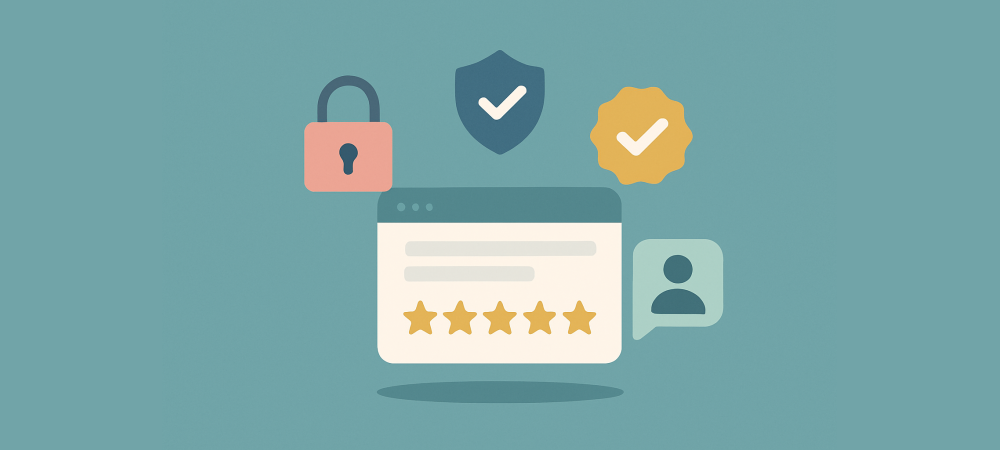
Every visitor who lands on your site is quietly asking one question: can I trust this? On the internet, where anyone can build a professional-looking page in an afternoon, that question decides whether people buy, sign up, or leave. The answer comes not from what you say about yourself but from the trust signals scattered across your site — the small cues that tell a stranger you are legitimate, competent, and safe to deal with. Here are 14 trust signals that genuinely work, and how to use each one.
Why trust signals matter
Trust is the precondition for every online action. A visitor will not hand over money, an email address, or personal details to a site that feels risky, no matter how good the offer. Because they cannot look you in the eye or walk into your shop, they judge your trustworthiness from whatever evidence is on the page — and they do it fast, often within seconds.
The good news is that trust is buildable. Each signal below removes a little doubt, and together they add up to a site that feels safe to act on. You do not need all 14 at once; start with the ones that fit your business and stack more over time.
1. Customer reviews and ratings
Reviews are the single most looked-for trust signal online. Seeing that real customers bought and were satisfied reassures a newcomer more than any claim you could make yourself. Display star ratings and genuine reviews where people decide — on product and pricing pages — and do not hide the occasional less-than-perfect one; a mix reads as honest rather than staged.
2. Testimonials with names and faces
A testimonial attached to a real name, photo, and specific result is far more convincing than an anonymous quote. Specificity is what sells: “This cut our support tickets in half” beats “Great product.” Place testimonials next to the objection they answer, so the proof lands exactly where the doubt lives.
3. Trust badges and security seals
Payment logos, SSL indicators, and recognised security seals reassure visitors that their details are safe. They matter most at checkout, where fear of fraud peaks. Use only badges you genuinely qualify for — a fake seal is worse than none, because it breaks the moment it is questioned.
4. Clear contact information
A visible address, phone number, or email tells visitors there are real people behind the site who can be reached if something goes wrong. Hiding your contact details has the opposite effect: it signals you may not want to be found, which is exactly what an untrustworthy operation would do.
5. Professional, clean design
Design is the first thing a visitor judges, often before reading a word. A clean, modern, uncluttered layout signals competence and care; a broken, dated, or chaotic one signals the opposite. You do not need to be fancy — you need to look considered and current.
6. A real About page
An About page with real people, a genuine story, and photos turns a faceless brand into something human and accountable. People trust businesses run by people they can see. Use it to explain who you are, why you exist, and who you serve — not to recite corporate filler.
7. Transparent pricing
Hidden costs are one of the fastest ways to lose trust. Show prices clearly, and surface shipping, taxes, and fees as early as possible. A visitor who feels a price was concealed until the last step rarely comes back — and often tells others why.
8. Clear policies
Easy-to-find return, refund, shipping, and privacy policies reassure visitors that you play fair and that they are protected if something goes wrong. A generous, plainly worded return policy in particular can be the deciding factor for a hesitant buyer weighing the risk of a first purchase.
9. A secure connection
HTTPS is now a baseline expectation. Browsers openly warn visitors when a site is “not secure,” and that single label is enough to send many people away. Make sure every page, especially checkout, runs over a secure connection — it is invisible when present and glaring when absent.
10. Real-time activity
Showing that others are buying or signing up right now is powerful, current proof that your business is active and trusted. Real-time notification widgets such as Proofly surface genuine recent purchases from one snippet of code, on a one-time plan — turning quiet activity into a visible trust signal, as long as every notification reflects a real event.
11. Media mentions and client logos
An “as featured in” strip or a row of recognisable client logos borrows the credibility of names your visitor already trusts. Even a niche publication or a handful of known clients lends real authority — provided the mentions are genuine and you have permission to show them.
12. Fast, error-free performance
A slow site, broken links, or error messages quietly erode trust: if the basics do not work, why would the checkout? Fast load times and a smooth, bug-free experience signal that you are competent and that the site is actively maintained by people who care.
13. Guarantees
A money-back guarantee or free returns shifts the risk from the buyer to you, which is exactly what a nervous first-timer wants to see. Standing publicly behind your product tells visitors you are confident it will deliver — and confidence is contagious.
14. Responsive support
Visible, responsive support — live chat, a helpful FAQ, quick replies — reassures visitors that help is available if they need it. Knowing a real person will answer lowers the perceived risk of buying from someone new and signals that you will not disappear after the sale.
How to prioritise your trust signals
You cannot add everything at once, so start where trust is weakest. If people abandon at checkout, lead with security badges, clear policies, and guarantees. If an unknown brand struggles to be taken seriously, prioritise reviews, an About page, and media or client logos. If your product pages convert poorly, focus on reviews, real-time activity, and testimonials.
Then keep stacking. Each signal you add removes a little more doubt, and the cumulative effect — a site that looks professional, proven, transparent, and human — is what turns cautious strangers into confident customers.
Frequently asked questions
What is the most important trust signal?
Customer reviews, for most businesses. They are what visitors actively look for and trust most, because they come from other buyers rather than from you.
How many trust signals should a website have?
As many genuine ones as fit naturally, placed where doubts arise. Focus on quality and relevance over quantity — a few strong, well-placed signals beat a cluttered wall of badges.
Can trust signals be faked?
They can, but doing so backfires. A fake badge, invented review, or staged testimonial destroys trust the moment it is spotted. Every signal should be real and verifiable.
Conclusion
Trust is not built with a single grand gesture but with many small, honest signals: reviews, testimonials, badges, clear contact details, clean design, transparent pricing and policies, a secure connection, real activity, recognisable mentions, fast performance, guarantees, and responsive support. Add the ones that fit, place them where visitors hesitate, and keep them genuine — and your website will answer that silent “can I trust this?” with a confident yes.
Use FOMO on your website!
Install Proofly in a few clicks to take advantage of FOMO on your website today! No creditcard required.
Get started now!Always be up-to-date with Proofly.
The amount of people using your website on mobile devices rapidly increases. Make sure your websites are fully responsive!
55.413%
Mobile devices
This might be useful for you too:

The Truth About Social Proof: What Works and What Backfires
Social proof is one of the most talked-about tactics in marketing, and one of the most misunderstood. Used well, it is a genuine force multiplier for trust and sales. Used carelessly — or dishonestly — i...
2021-12-04
Read more

Social Credibility: How Social Media Builds Your Online Presence
People trust what other people trust. That simple truth is the heart of social credibility — the reputation and trustworthiness you earn in the eyes of your audience. Social media is one of the most powerful p...
2022-03-16
Read more
Social Proof Strategy: How to Build One That Drives Sales
Most businesses collect social proof by accident. A review turns up here, a testimonial there, and it all gets scattered across a page nobody visits. That is not a strategy — it is a pile. A real social proof...
2022-07-20
Read more
Ready to use social-proof too?
You can use Proofly within 5 minutes on your own website absolutely free!
Set-up in 5 minutes Over 25,000 satisfied customers No monthly subscription
4.7/5 customer satisfaction
Get started now!
a few thousand others...