
Cart Abandonment Statistics: Why Shoppers Leave in 2024
December 11, 2024 | 2,619 views | 12 min. read time
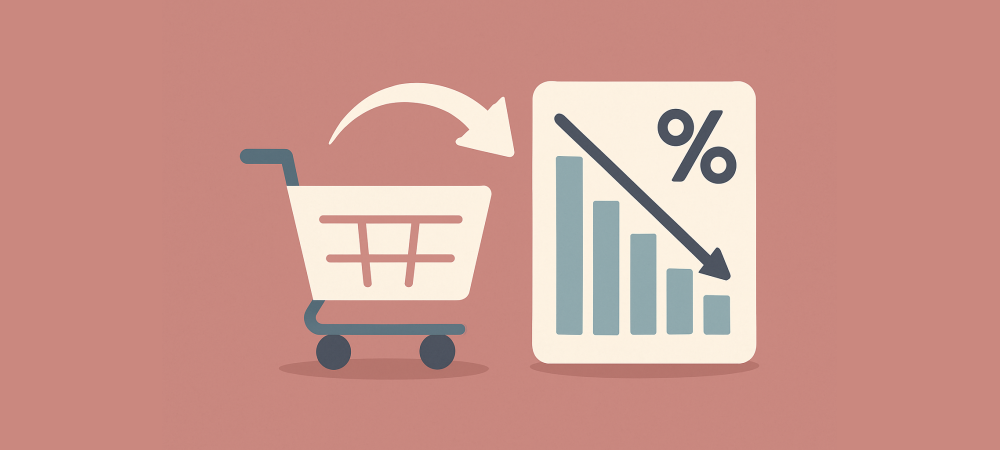
Few numbers in ecommerce are as sobering — or as full of opportunity — as the cart abandonment rate. The majority of shoppers who add something to their cart never complete the purchase, which means most stores are losing sales they were moments from making. But the research also tells us exactly why people leave, and most of the reasons are fixable. Here are the key cart abandonment statistics for 2024 and what they mean for your store.
A note on these figures
The statistics below draw heavily on the Baymard Institute, whose research on checkout usability and abandonment is among the most widely cited in ecommerce, along with other industry sources. Figures are rounded and vary by study and year, so treat them as directional. For precise, current numbers, consult the original research and, above all, your own analytics.
How big the problem is
- Around 70% of carts are abandoned. The Baymard Institute’s analysis of dozens of studies puts the average documented online cart abandonment rate near 70%, meaning roughly seven in ten started purchases are never finished.
- Abandonment is even higher on mobile. Industry data consistently shows mobile carts are abandoned at a higher rate than desktop, reflecting the extra friction of buying on a small screen.
- Much of it is recoverable. Not all abandonment is lost forever — a significant share of shoppers can be brought back with the right fixes and reminders, which is what makes the number an opportunity rather than just a loss.
Why shoppers abandon their carts
- Extra costs are the number one reason. Baymard consistently finds that unexpected extra costs — shipping, taxes, and fees revealed at checkout — are the single most common cause of abandonment.
- Forced account creation drives people away. Being required to create an account before buying is one of the leading reasons shoppers give up, which is why guest checkout matters so much.
- A long or complicated checkout loses sales. Baymard’s research points to overly long or confusing checkout flows as a major cause of abandonment; every unnecessary step and field costs completions.
More reasons behind the drop-off
- Shoppers do not trust the site with their card. Concerns about payment security cause real abandonment, which is why visible trust signals at checkout matter.
- They cannot see the total cost upfront. When shoppers cannot calculate the full price early, many abandon rather than proceed into uncertainty.
- Delivery is too slow. Unappealing or unclear delivery times push shoppers to abandon in favour of a faster option elsewhere.
- The return policy is unsatisfactory. A weak or unclear returns policy raises the perceived risk of buying and contributes to abandonment.
- Errors and crashes. Website errors during checkout erode confidence and cause shoppers to give up at the worst possible moment.
- Many are simply not ready. A share of abandonment comes from people browsing, comparing, or saving items for later — not every cart represents a lost, recoverable sale.
What the statistics tell you to fix
Read together, the research is almost a checklist. Because surprise costs top the list, showing shipping and fees early — or offering free shipping — is one of the highest-impact changes you can make. Offering guest checkout, shortening the process, supporting the payment methods people expect, and adding trust signals all target the other leading reasons directly.
Trust runs through many of these causes, and visible social proof helps address it. Tools like Proofly can show genuine recent-purchase activity and reviews during the journey, reassuring shoppers that others buy here safely — one more way to close the gap the abandonment numbers expose. Pair that with cart-recovery emails, and you turn a big share of that 70% back into completed sales.
What that 70% actually costs you
It is worth translating the abandonment rate into money, because the scale is easy to underestimate. If a store attracts 1,000 shoppers who reach the cart each month and 70% abandon, that is 700 started purchases going unfinished every month. Even recovering a fraction of them — through clearer costs, an easier checkout, or a recovery email — can add up to a substantial lift in revenue without a single extra visitor.
This is why abandonment is best seen as an opportunity rather than a loss. The shoppers are already interested; they added something to the cart. Closing even part of the gap between that intent and the completed sale is often the cheapest growth available to an online store, because you are recovering demand you have already paid to attract.
It also reframes how you should think about spending on recovery. Because these shoppers have already shown intent, the return on fixing checkout friction or sending a reminder email is usually far higher than the return on buying more traffic. A dollar spent smoothing the path to purchase tends to work harder than a dollar spent attracting new visitors who then hit the same obstacles. For most stores, the cheapest and fastest growth available is sitting right there in the abandoned-cart data, waiting for the friction to be removed — rarely glamorous work, but almost always the highest-return work an online store can do.
A worked example
Consider a store with an 80% cart abandonment rate, well above the average. Looking at where shoppers drop off, the owner sees most leave on the shipping step, exactly where an unexpected delivery fee first appears — the number one reason Baymard identifies. Instead of guessing, she acts on that single insight.
She introduces a free-shipping threshold, shows delivery costs earlier in the journey, and adds a simple guest-checkout option to remove a second common barrier. She also sets up a short cart-recovery email for those who still leave. Over the following weeks, abandonment falls and completed orders rise, with no change to traffic. The statistics told her which reasons matter most; her own data told her which one was costing her the most, and fixing it turned a chunk of that abandoned 80% into sales.
Frequently asked questions
What is the average cart abandonment rate?
The Baymard Institute puts the average documented rate near 70%, based on an analysis of many studies. It varies by industry and device — mobile tends to be higher — but roughly seven in ten started purchases going unfinished is a useful rule of thumb.
What is the biggest cause of cart abandonment?
Unexpected extra costs at checkout — shipping, taxes, and fees — are consistently the number one reason in Baymard’s research. Showing the true total early is one of the most effective fixes.
Can abandoned carts be recovered?
Many can. Fixing the underlying causes reduces abandonment in the first place, and cart-recovery emails plus retargeting bring back a meaningful share of shoppers who left with genuine intent to buy.
Conclusion
Cart abandonment statistics look grim — roughly 70% of carts left behind — but the same research hands you the solution. Shoppers leave mostly because of surprise costs, forced accounts, complicated checkouts, and shaky trust, and every one of those is fixable. Show the true total early, streamline the process, build trust with social proof, and recover the rest with reminders. Do that, and a large slice of those abandoned carts becomes real revenue.
Use FOMO on your website!
Install Proofly in a few clicks to take advantage of FOMO on your website today! No creditcard required.
Get started now!Always be up-to-date with Proofly.
The amount of people using your website on mobile devices rapidly increases. Make sure your websites are fully responsive!
55.521%
Mobile devices
This might be useful for you too:
How to Build Trust on a Website: 14 Trust Signals That Work
Every visitor who lands on your site is quietly asking one question: can I trust this? On the internet, where anyone can build a professional-looking page in an afternoon, that question decides whether people buy,...
2023-01-25
Read more

Ecommerce Conversion Rate Optimization: 18 Proven Tactics for 2023
Getting traffic to an online store is expensive; turning that traffic into buyers is where the real money is made. Conversion rate optimization, or CRO, is the discipline of steadily improving the percentage of vis...
2023-08-24
Read more

The Pros and Cons of Building a Website for Your Business
In today’s world, a website is no longer optional for a business — but how you build it is a real decision. You can code a custom site, use a website builder, or hire someone to do it for you, and each p...
2022-02-17
Read more
Ready to use social-proof too?
You can use Proofly within 5 minutes on your own website absolutely free!
Set-up in 5 minutes Over 25,000 satisfied customers No monthly subscription
4.7/5 customer satisfaction
Get started now!
a few thousand others...