
Coupon Popups: How to Use Discounts Without Killing Margin
October 16, 2024 | 3,787 views | 12 min. read time
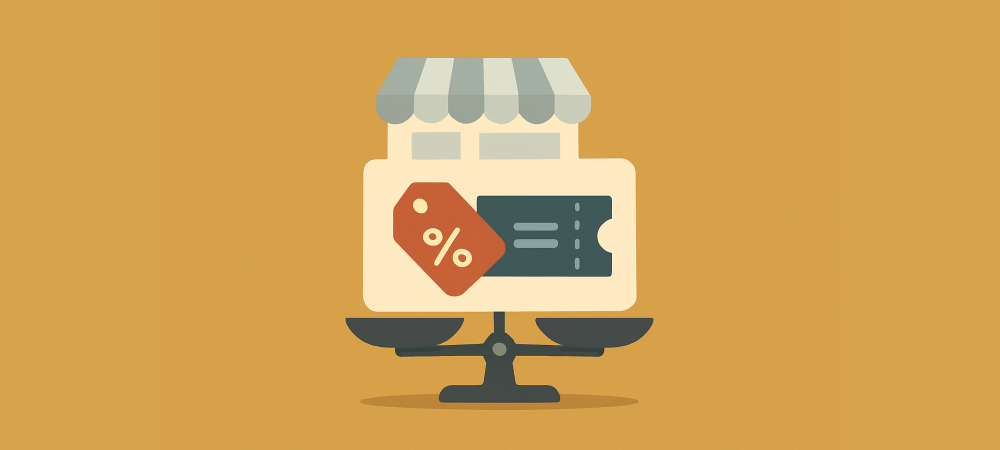
Discount popups are one of the fastest ways to turn a hesitant visitor into a buyer — and one of the easiest ways to quietly erode your profit. Offer too much, too often, to the wrong people, and you simply train customers never to pay full price. Used well, coupon popups lift conversions and grow your email list without wrecking your margins. This guide covers how to use coupon popups the smart way, protecting your bottom line while still winning the sale.
1. What coupon popups are and why they work
A coupon popup is an on-site message that offers a discount code, usually in exchange for an email address or as a nudge to complete a purchase. It works because a discount does two things at once: it lowers the perceived risk of buying and it creates a small sense of urgency, especially when the code has a genuine expiry. For a shopper on the fence, a timely coupon can be the final push.
Coupon popups are also a proven list-building tool. Many shoppers who would never subscribe to a plain newsletter will happily hand over an email for a first-order discount, giving you a way to market to them long after they leave. The tactic is popular precisely because it delivers on two fronts — immediate conversions and future reach.
2. The margin problem with discounting
The catch is obvious once you do the maths. Every discount comes straight off your profit, not your revenue, so a 20% coupon on a product with a 40% margin gives away half your profit on that sale. Offer discounts carelessly and you can end up busier but poorer, moving more stock for less money.
A quick example shows the danger. Sell a 60 item at a 40% margin and you make 24 in profit; hand over a 20% coupon and that profit drops to 12 — you have done the same work and shipped the same product for half the reward. Multiply that across every order and an unmanaged coupon habit can quietly turn a healthy store into a busy but barely profitable one.
There is a subtler cost, too. Show a discount to everyone, all the time, and you teach your customers that your prices are never really the prices — they simply wait for the next code. Over time this erodes your full-price sales and your brand’s perceived value. The goal, then, is not to stop using coupon popups, but to use them in a way that protects both your margin and your pricing integrity.
3. When to show a coupon popup, and when not to
The smartest discounting is targeted rather than universal. A coupon popup earns its keep when it wins a customer you would otherwise lose — a first-time visitor who needs a nudge, or a shopper showing exit intent on their way to abandoning a cart. In those moments a small discount recovers a sale that was slipping away.
It makes far less sense to hand a discount to someone who was already going to buy at full price. Showing a blanket coupon to every visitor, including loyal customers mid-purchase, just gives away margin you did not need to spend. The principle is simple: discount to change a decision, not to reward one that was already made.
4. How to protect your margin while discounting
Several tactics let you use coupons without giving away the shop. Set a minimum spend so the discount lifts the order value that funds it — “10% off orders over 50” protects your margin while still feeling generous. Favour percentage or fixed discounts that your numbers can genuinely absorb, and consider offering free shipping or a free add-on instead of a straight price cut, since these often feel just as valuable while costing you less.
Reserve your deeper discounts for the situations that warrant them, such as recovering an abandoning cart or winning a brand-new customer whose lifetime value justifies the upfront cost. And always attach a genuine expiry, so the offer drives action now rather than becoming a permanent price reduction. Discipline here is what keeps coupons a tool rather than a leak.
5. Get the timing and targeting right
Like any popup, a coupon offer annoys when it is badly timed and helps when it is well timed. Firing it the instant someone arrives, before they have seen anything, feels pushy and cheapens your product. Triggering it on exit intent, after a period of browsing, or at the cart stage catches people at moments when a discount genuinely changes the outcome.
Targeting sharpens this further. Where you can, show first-order discounts only to new visitors, save cart-recovery coupons for people actually abandoning a cart, and avoid interrupting loyal customers who are already buying. Matching the offer to the visitor means you spend margin only where it does real work.
6. How to add coupon popups to your site
You do not need to build coupon popups from scratch. Most stores use a popup or social-proof tool that handles the display, timing, and targeting for you, so you can focus on the strategy rather than the code. Proofly, for example, includes a coupon notification among its widgets, so you can add a well-timed discount popup — alongside real-time social proof and email capture — from a single snippet of code and a one-time plan. You can set it up in minutes at Proofly and configure who sees it and when.
Whichever tool you use, the settings are what protect your margin. Use its targeting and timing controls to show the right coupon to the right visitor at the right moment, set genuine expiries, and keep the design clean and on-brand so the offer feels like a considered gesture rather than a desperate one.
7. Mistakes to avoid
- Discounting everyone, always. A permanent, universal coupon trains customers to never pay full price and steadily erodes your margins.
- No minimum or expiry. Discounts with no conditions give away margin freely and create no urgency to act.
- Interrupting ready buyers. Showing a coupon to someone already checking out simply hands back profit you had already earned.
- Going too deep. Oversized discounts can win a sale while losing money and cheapening how customers perceive your brand.
Frequently asked questions
Do coupon popups hurt your profit?
They can if used carelessly, since every discount comes off your profit. Used with minimum spends, expiries, and targeting — so you discount only to change a decision — they lift sales without wrecking margins.
When should a coupon popup appear?
At moments where a discount changes the outcome: on exit intent, after some browsing, or at the cart stage. Avoid firing it the instant someone arrives or showing it to customers already buying.
What is better than a straight discount?
Free shipping, a free add-on, or a discount with a minimum spend often feel just as valuable to shoppers while costing you less margin, so they are worth testing against a plain price cut.
Conclusion
Coupon popups are powerful, but power without discipline is expensive. Discount to change a decision, not to reward one already made: target new visitors and abandoning carts, attach minimum spends and genuine expiries, and consider free shipping over deeper price cuts. Add them with a tool that gives you real timing and targeting control, and coupon popups will lift your conversions and grow your list — without quietly killing your margin.
Need more customers/visitors?
Use Proofly to add high-converting widgets for your website to boost conversion. No creditcard required.
Get started now!Always be up-to-date with Proofly.
The amount of people using your website on mobile devices rapidly increases. Make sure your websites are fully responsive!
55.521%
Mobile devices
This might be useful for you too:
Cart Abandonment Statistics: Why Shoppers Leave in 2024
Few numbers in ecommerce are as sobering — or as full of opportunity — as the cart abandonment rate. The majority of shoppers who add something to their cart never complete the purchase, which means mos...
2024-12-11
Read more
The Benefits of Social Proof: 9 Ways It Grows Revenue
Social proof is often treated as a nice-to-have — a few reviews to tidy up a product page. In reality it is one of the highest-leverage assets a business owns, because it works on the exact moment a visitor d...
2022-08-17
Read more
Wix Social Proof: How to Boost Conversions on Wix
Wix makes it easy for anyone to build a beautiful website, but a polished design alone does not convince visitors to buy or sign up. For that you need social proof — the reviews, ratings, testimonials, and re...
2024-05-20
Read more
Ready to use social-proof too?
You can use Proofly within 5 minutes on your own website absolutely free!
Set-up in 5 minutes Over 25,000 satisfied customers No monthly subscription
4.7/5 customer satisfaction
Get started now!
a few thousand others...